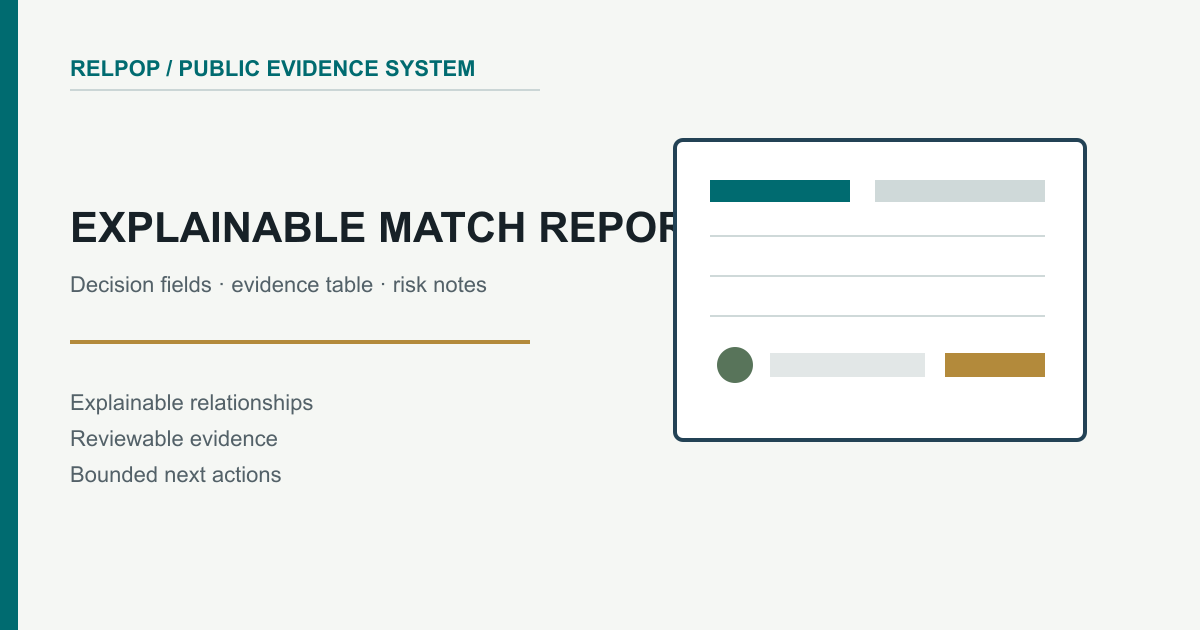
The value of a report template is not visual polish. It is that a business team can judge, validate, and advance the candidate list.
Report structure
The first section states Company A's goal and the target Company B scope. The second gives candidates and ranking reasons. The third shows the evidence trail behind each recommendation. The fourth gives confidence, risk, and next action. The fifth records unresolved questions for review.
Minimum fields for each recommendation
- Company B name or anonymized code.
- Relationship type, such as purchasing demand, supply chain, peer substitution, or policy opportunity.
- Recommendation reason in business language.
- Evidence summary, including source and time.
- Confidence and risk without turning hypotheses into facts.
- Next action, such as validating the owner, confirming project stage, or preparing reference cases.
Why the risk field matters
A match report without risk fields can become a pile of reasons to recommend. The opportunity may have expired, the budget may not exist, the other side may already have a stable supplier, or Company A's capability may not fit. Stating risks clearly improves the report's credibility.
From template to system
Once multiple reports reuse the same fields, scoring dimensions, relationship types, evidence weights, and collection rules can be captured gradually. Start from a reusable output contract, not a complex interface.